We get a version of this question every week from families abroad: “My mother isn’t an Indian citizen anymore — does she need a visa to come in for cataract surgery, and what paperwork do we actually need from you?” It’s a fair question, and one that trips people up more than the surgery itself, mostly because the answer depends on a few specifics most people don’t think to check until they’re already booking flights.
Here’s what a visa facilitation letter actually is, who needs one, and how to avoid the last-minute scramble.
Who Actually Needs This Letter
First, the cases where you likely don’t need one at all:
- OCI (Overseas Citizen of India) cardholders generally don’t need a medical visa for treatment in India, since the OCI card itself functions as a lifelong visa for most purposes, including medical care. Bring the OCI card and a valid passport.
- Indian passport holders living abroad don’t need any visa to enter India, regardless of where they’re travelling from.
If either of these applies to you or your parent, you can generally skip the visa facilitation letter altogether and go straight to booking your consultation.
Where you do need one:
- Foreign nationals without an OCI card travelling to India specifically for medical treatment — this includes many second- or third-generation NRIs who never applied for OCI status, and non-Indian spouses accompanying a patient
- Attendants travelling with a patient on a Medical Attendant visa, which typically requires its own supporting documentation from the treating hospital
What a Visa Facilitation Letter Actually Contains
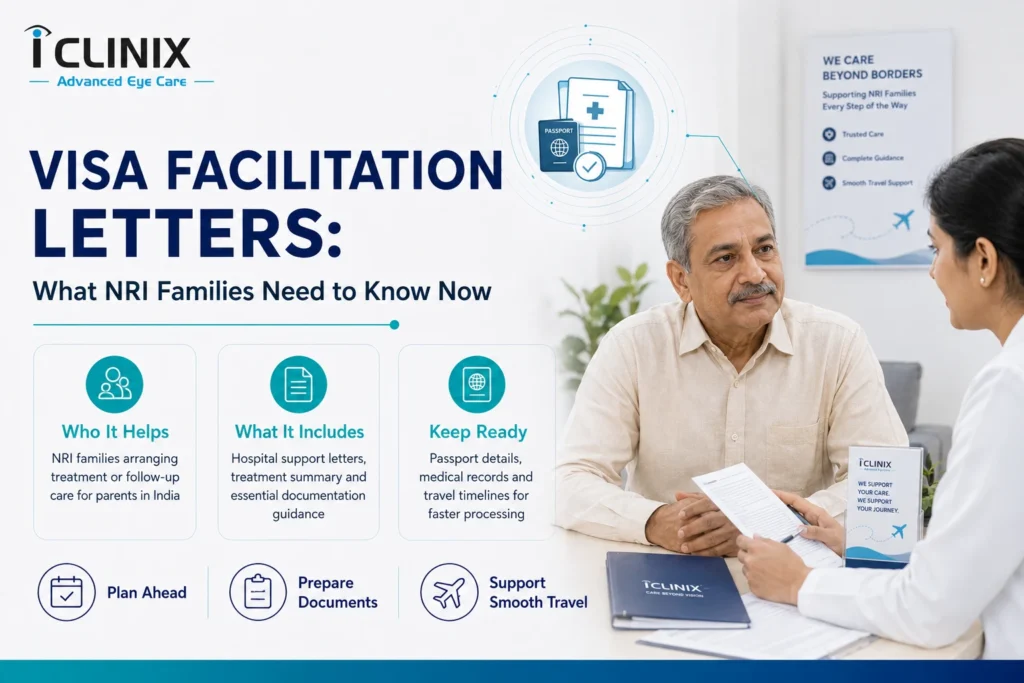
This is essentially a formal letter on the hospital’s letterhead, addressed to Indian immigration authorities, confirming that you or your parent has a genuine medical reason to enter the country. It typically includes the patient’s name and passport details, the nature of the planned treatment, the treating doctor’s name and credentials, and the hospital’s registration and accreditation details.
This letter doesn’t replace the visa application itself — it’s a required supporting document you submit alongside your application on India’s official e-Visa portal, under the Medical or Medical Attendant visa category.
How the Process Actually Works, Step by Step
- Reach out to us before applying for anything. We’ll need enough information about the condition and planned treatment to issue an accurate letter — this usually happens after a preliminary review of medical reports, even before the in-person consultation is scheduled.
- We issue the letter on hospital letterhead, addressed appropriately for the e-Visa medical category, once the treatment plan is confirmed.
- You apply for the e-Medical visa (or e-Medical Attendant visa) through India’s official government e-Visa portal, uploading the letter along with your passport details and medical reports.
- Processing typically takes a few days once submitted correctly, though this varies by nationality and current visa volumes, so we generally recommend applying at least two to three weeks before your planned travel date, not the week before.
- Carry a physical or digital copy of the letter with you when you travel, in addition to what’s uploaded during the visa application — immigration officers on arrival may ask to see supporting documents.
Common Mistakes That Delay Things
A few patterns we see repeatedly from families managing this from abroad:
- Applying for a Tourist e-Visa instead of a Medical e-Visa because it seemed simpler, only to run into issues at immigration or with insurance later if treatment needs extend beyond a short visit
- Requesting the letter too close to the travel date, leaving no buffer if visa processing takes longer than expected for a particular nationality
- Not including an attendant’s documentation early enough, since a Medical Attendant visa needs its own supporting paperwork tied to the primary patient’s letter
- Assuming an OCI card covers a companion who doesn’t hold one themselves — each traveller’s visa status is assessed individually, not as a family unit
What Else Our International Patient Coordination Covers
The visa letter is usually just the first piece of what needs organising. Beyond documentation, our international patient coordination helps arrange airport pickup and drop-off, accommodation recommendations near the treating centre, interpreter support where needed, and coordination with your existing medical reports and current doctor abroad, so your consultation in Delhi doesn’t start from zero.
If you’re planning to combine the visit with time to see family or explore the country once treatment allows, let us know in advance — this is common among the NRI families we see, and it’s easier to plan around when we know upfront rather than adjusting after arrival.
Frequently Asked Questions
Do I need a visa facilitation letter if I’m just coming for a second opinion, not surgery?
It depends on your visa category and nationality. If you already hold a valid tourist visa or OCI card, a consultation alone often doesn’t require the medical-specific letter — but check with us directly, since this varies by individual circumstances.
How far in advance should I request the letter?
As soon as your treatment plan is reasonably confirmed — ideally three to four weeks before your planned travel date, to leave a comfortable buffer for visa processing.
Can the letter be issued before I’ve had an in-person consultation?
Often, yes, based on a preliminary review of medical reports and a documented treatment plan, though this depends on the complexity of the case.
Does my attendant need a separate visa facilitation letter?
Attendants travelling on a Medical Attendant visa typically need supporting documentation tied to the primary patient’s letter, which we can help arrange together.
Where do I actually submit the visa application?
Through India’s official government e-Visa portal — not through third-party agents claiming to expedite the process, which can create more problems than they solve.
Get Started on Your Medical Visa Documentation
If you’re planning treatment in India for yourself or a parent, reach out early so we can get your documentation moving before travel dates get locked in.