

Advanced eye care, closer to you across Delhi NCR Appointments: +91 98991 18030
Cataract & Lens Replacement
CONDITIONS & TREATMENTS

Cataract & Lens Replacement Surgery in Delhi NCR

Restore everyday clarity with a lens plan built around your eyes, your lifestyle and your visual goals. Learn how modern cataract surgery and IOL choices work at IClinix.

PhacoMicro-incision technique
3+IOL categories to choose
Day-careHome the same day
InsuranceCashless guidance available
COMPARE YOUR OPTIONS

Cataract & Lens Replacement — types & approaches

Each option has its own strengths. Your specialist will match the right pathway to your eyes and lifestyle.

01

Monofocal IOL

Clear distance vision — glasses usually needed for reading.

A reliable, widely used lens option.
02

EDOF IOL

Extended depth of focus for smoother vision transitions.

Reduces glasses dependence for mid-range tasks like a laptop.
03

Trifocal IOL

Distance, intermediate and near vision in one lens.

Suited to patients seeking maximum spectacle independence.
04

Toric IOL

Corrects significant corneal astigmatism.

Can be combined with monofocal, EDOF or trifocal platforms.
COMPARE YOUR OPTIONS

How your cataract surgery is performed: Phaco, MICS or FLACS

Every cataract operation does the same job — the cloudy lens comes out, a clear one goes in. The difference is how the lens is removed and how much is done by hand versus by laser.

01

Standard phaco

Hand-made incision, ultrasound breaks up the cataract.

The proven workhorse of cataract surgery.
02

MICS

Phaco through an incision of about 2.2mm or less.

Self-sealing, stitch-free, minimal corneal change.
03

FLACS

Femtosecond laser performs incisions and capsule opening.

Best where lens centration or astigmatism correction matters.

Straight talk: for a routine cataract, well-done phaco or MICS gives excellent results. FLACS adds precision and matters most with premium lenses and in selected complex eyes — we will not recommend the costlier option if it will not help you.

ELIGIBILITY

Who is a good candidate?

Eligibility is confirmed through a detailed screening — the checklist below is a starting point.

Progressive blurring, glare or difficulty in low light

Change in glasses power without improvement in clarity

Trouble driving at night or reading small print

Clinically confirmed cataract on examination

Fit for day-care surgery under topical anaesthesia

THE PROCEDURE

A clear, step-by-step pathway

01

Detailed assessment

Vision test, biometry and lifestyle discussion for the right IOL.

02

IOL counselling

Understand monofocal, EDOF and trifocal choices and their trade-offs.

03

Surgery day

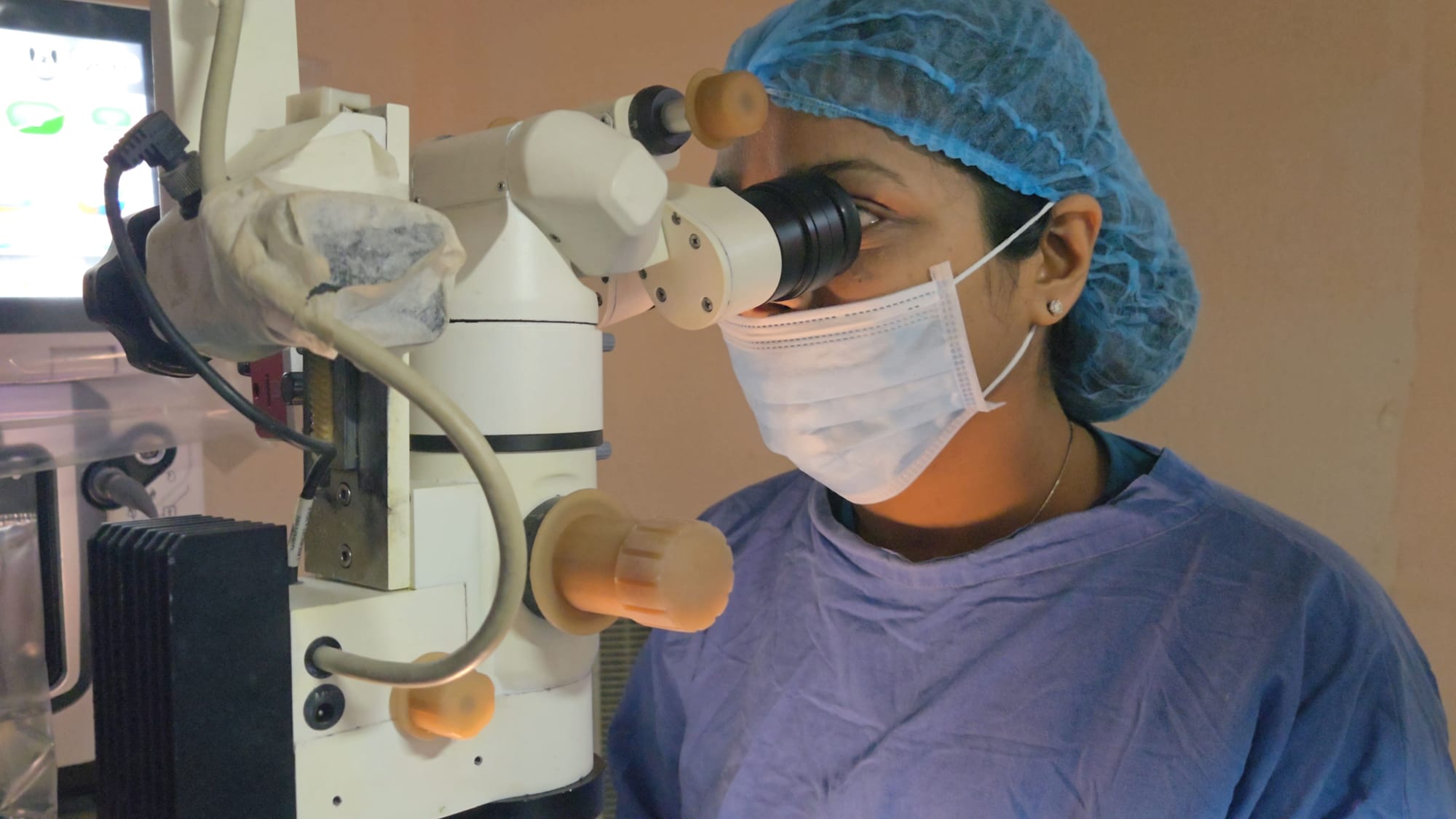
A ~15 minute micro-incision phaco procedure, usually under drops only.

04

Aftercare

Structured drops, a next-day review and a clear return-to-routine plan.

TECHNOLOGY

Modern platforms, careful decisions

Phacoemulsification with micro-incision technique
Optical biometry for IOL power calculation
Anterior segment OCT & specular microscopy
Consultant-led IOL selection & planning
YOUR SURGEONS

Specialists who treat cataract & lens replacement

COST & INSURANCE

Understanding cost, technology and recovery

Final cost depends on your eye, the recommended pathway, chosen technology and any lens or implant options. Our care team explains each factor before you decide, including cashless insurance and EMI where applicable.

  • Transparent estimates after screening
  • Cashless support across major TPAs
  • Structured recovery and follow-up plan
  • Second-opinion friendly consultations
Insurance & empanelments
AVAILABLE AT

Centres offering cataract & lens replacement

PATIENT QUESTIONS

Cataract & Lens Replacement — patient questions

How long does cataract surgery take?

The procedure itself typically lasts 15–20 minutes and is done as day-care.

Which IOL should I choose?

Your surgeon will match the lens to your eye health, lifestyle and visual priorities.

Will insurance cover cataract surgery?

Most policies do — our care team can help with pre-authorisation and paperwork.

How soon can I read after surgery?

Most patients notice clearer distance quickly; near tasks improve as the eye settles.

RELATED CARE

You may also want to read

YOUR NEXT STEP

Good eye care starts
with a conversation.

Call WhatsApp Book