

Advanced eye care, closer to you across Delhi NCR Appointments: +91 98991 18030
Placido-disc corneal topographer at IClinix
CONDITIONS & TREATMENTS

Cornea & Corneal Transplant Surgery in Delhi NCR

When the cornea is scarred, swollen or thinning, we look at every option before recommending a transplant — and when a graft is right, we explain exactly which kind and why, in plain language.

DALK / PKFull & lamellar grafts
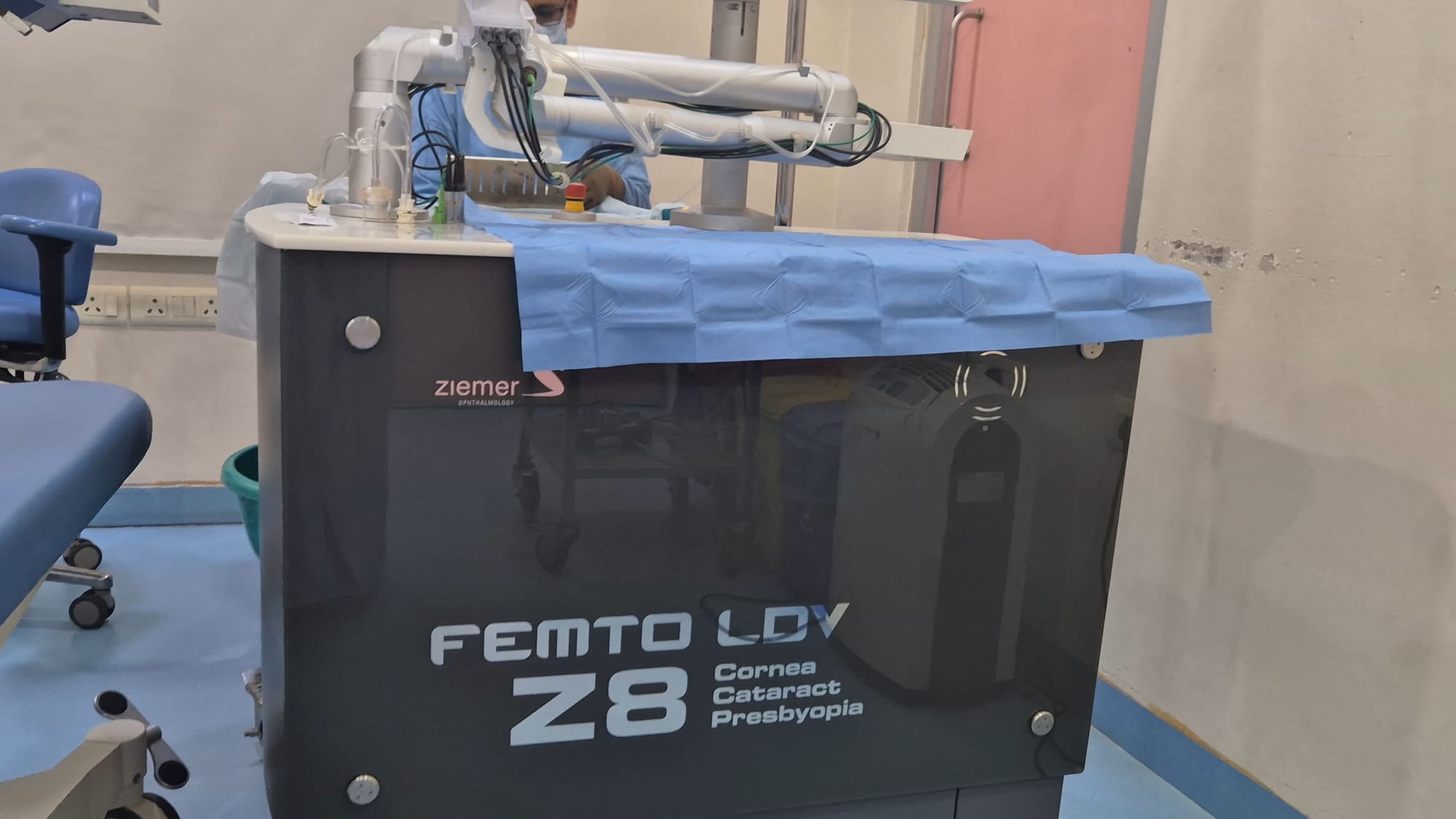
Femto-assistedLaser-cut grafts available
Day-careHome the same day
InsuranceCashless guidance available
COMPARE YOUR OPTIONS

Cornea & Corneal Transplant — types & approaches

Each graft type replaces a different depth of the cornea. Your specialist matches the right one to how much of your cornea is actually diseased.

01

Full-thickness graft (PK)

Replaces the entire central cornea.

Used for deep infection, severe injury or scarring through every layer.
02

Anterior lamellar (DALK)

Replaces only the front layers; your own inner layer stays.

First choice for keratoconus and front-layer scars.
03

Endothelial graft (DSAEK / DMEK)

Replaces just the innermost pump layer through a small opening.

For Fuchs' dystrophy and swelling after eye surgery.
04

Femto-assisted graft

Laser-cut, interlocking edges instead of a plain circular cut.

Can be combined with PK or DALK where suitable.
BEFORE A TRANSPLANT

A graft is not always the first step

We look at what could protect your own cornea before we talk about replacing it.

Corneal cross-linking to halt progressive keratoconus

Rigid or scleral contact lenses for sharper vision

Medical treatment for infection or inflammation

Laser polishing of surface scars in selected cases

A transplant when the cornea is too scarred, swollen or thin for the above

THE PROCEDURE

A clear, step-by-step pathway

01

Detailed assessment

Corneal topography and tomography to map every layer and confirm the diagnosis.

02

Graft counselling

Understand full-thickness vs. lamellar options, and whether laser-assisted cutting suits your eye.

03

Surgery day

Usually day-care, roughly 1–2 hours, most often under local anaesthesia with sedation.

04

Aftercare

Structured steroid and antibiotic drops, staged stitch removal, and a rejection-watch checklist.

KNOW THE SIGNS

Graft rejection — call us the same day if you notice

Caught early, rejection is usually treatable with drops. Doctors remember it as RSVP.

Redness that does not settle

Sensitivity to light

Vision dropping or turning hazy

Pain in the eye

TECHNOLOGY

Modern platforms, careful decisions

Femtosecond laser for custom-shaped graft edges
Anterior segment OCT & specular microscopy
Corneal topography & tomography for layer-by-layer mapping
Consultant-led graft-type selection & planning
YOUR SURGEONS

Specialists who treat cornea & corneal transplant

COST & INSURANCE

Understanding cost, tissue and recovery

Final cost depends on the graft type, whether laser is used, donor tissue arrangement and hospital stay. Our care team explains each factor before you decide.

  • Transparent estimates after screening
  • Cashless support across major TPAs
  • Eye-bank coordination for donor tissue
  • Structured recovery and rejection-watch follow-up
Insurance & empanelments
AVAILABLE AT

Centres offering cornea & corneal transplant

PATIENT QUESTIONS

Cornea & Corneal Transplant — patient questions

How long does a corneal graft last?

Many grafts last for years, some for decades. It depends on the reason for the graft, your eye and how faithfully you follow up.

Will I need glasses after a transplant?

Very often, yes. The graft clears the eye; glasses or a contact lens fine-tune the final vision.

How long is the wait for donor tissue?

It varies with availability. We give a realistic estimate once you are assessed and listed.

Is keratoconus always treated with a transplant?

No. Most people with keratoconus never need one, especially if caught early and treated with cross-linking.

RELATED CARE

You may also want to read

YOUR NEXT STEP

Good eye care starts
with a conversation.

Call WhatsApp Book