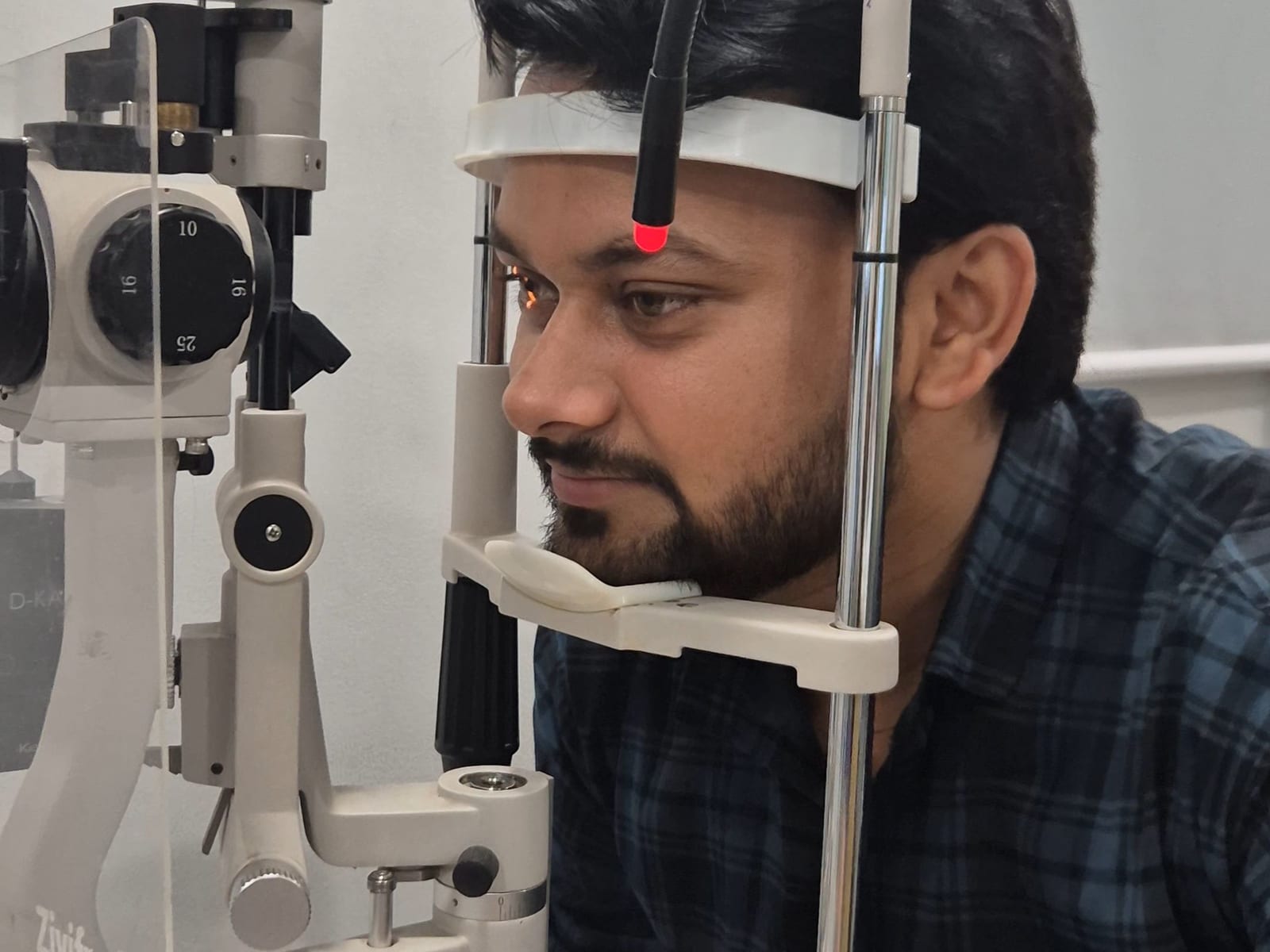
A squint is when the two eyes don't point in the same direction at the same time. It can appear in infancy, show up only when a child is tired, or develop later in adults after an illness or injury. Caught early in children, most squints respond very well to treatment — and in many cases, without surgery.
Squints are described by the direction the eye drifts. The type, the angle and the cause all shape the treatment plan.
01
Esotropia (inward)
One or both eyes turn towards the nose.
The most common childhood squint; often linked to long-sightedness.
02
Exotropia (outward)
One or both eyes drift outward, often more when tired or daydreaming.
May be intermittent at first and become more constant over time.
03
Vertical squint
One eye sits higher or lower than the other.
Can cause a head tilt as the child compensates.
04
Adult-onset squint
New misalignment after illness, thyroid eye disease, stroke or injury.
Usually causes double vision and needs prompt assessment.
BEFORE SURGERY
Surgery is not always the first step
A large number of squints are managed without an operation, especially in young children.
Glasses to correct the refractive error driving the squint
Patching (occlusion) therapy to treat a lazy eye (amblyopia)
Prism lenses to merge double vision in select adult cases
Eye-muscle exercises for certain convergence problems
Surgery when the angle is large, constant, or not improving with the above
THE PROCEDURE
A clear, step-by-step pathway
01
Detailed assessment
Vision test, glasses check, and measurement of the squint angle in different directions of gaze.
02
Treatment counselling
Understand whether glasses, patching or surgery is the right starting point, and what to expect.
03
Surgery day
Usually day-care, roughly 45–60 minutes per eye, under general anaesthesia for children.
04
Aftercare
A next-day review, redness settling over 2–3 weeks, and a follow-up plan to check alignment holds.
WHY EARLY MATTERS
Squint in children: the window that matters most
A young brain can learn to "switch off" a misaligned eye, which is how lazy eye (amblyopia) develops. The earlier this is caught, the easier it is to reverse — vision in a lazy eye is much harder to recover once a child is older.
One eye appears to drift in photos, especially when tired
A child tilts or turns their head to look at things
Closing or covering one eye in bright light
Poor depth perception — clumsiness, missing objects when reaching
Any squint noticed after 4 months of age needs assessment
TECHNOLOGY
Careful, measured planning
Prism cover testing across all gaze positions
Synoptophore assessment for binocular vision and depth perception
Adjustable-suture technique in selected adult cases
Consultant-led surgical planning, muscle by muscle
Final cost depends on whether one or both eyes are treated, how many muscles are involved, and whether it's a first surgery or a re-operation. Our care team explains each factor before you decide.
4 years of trust — a cataract surgery patient's experience
From glasses to clear vision
Real patients, real reviews
Real patients, real reviews
Real patients, real reviews
Smiles like these make our work worth it
Patient trust is at the heart of everything we do
A happy patient shares their eye treatment experience
PATIENT QUESTIONS
Squint & Strabismus — patient questions
Will my child grow out of a squint?
Some intermittent squints in very young infants settle on their own, but a squint that persists past 4 months, or appears later, needs assessment — it will not reliably resolve by itself.
Is squint surgery painful?
It's done under anaesthesia, so there's no pain during surgery. Expect mild soreness, redness and watering for a week or two afterwards.
Can adults get squint surgery too?
Yes. Adult-onset squints, and squints carried over from childhood, can both be corrected — often improving double vision and depth perception.
Does squint surgery correct vision?
It straightens the eyes; it does not itself sharpen blurred vision. Glasses or amblyopia treatment are managed alongside it where needed.
Will it come back after surgery?
Most results are stable, but a small proportion of patients need a follow-up adjustment or second procedure, particularly with larger angles.