

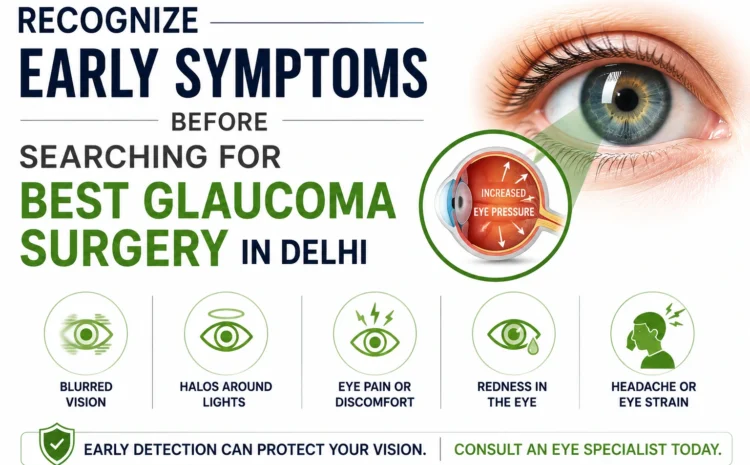
The majority of eye problems are easy to see. If you have pain, redness, irritation or blurred vision, you know you need to see an optometrist and where to get the best glaucoma surgery in Delhi. Glaucoma is different.
Glaucoma, often called the “silent thief of sight,” can damage the optic nerve gradually in the early stages without symptoms. Many people live their lives without realizing that their eyesight is slowly diminishing. By the time they realize something is wrong they may have some of the loss of vision that may be irreversible.
Fortunately glaucoma does not always need surgery. Early diagnosis and prompt treatment by eye drops or laser surgery can often help the problem. If glaucoma continues to progress despite these therapies, surgery may be needed to preserve remaining vision.
If you want the best glaucoma surgery in Delhi, then knowing the early warning signs of glaucoma will help you get medical help before the problem becomes worse.
What is Glaucoma ?
Glaucoma is a group of eye conditions that damage the optic nerve, which carries visual information from your eyes to your brain. The lesion is most often caused by increased intra-ocular pressure, but patients with normal intra-ocular pressure may develop glaucoma. Glaucoma damage is permanent. The optic nerve does not grow back, and any vision lost to glaucoma is gone forever. That’s why early detection is so important.
Why does glaucoma often go undiagnosed?
Glaucoma is different from many eye conditions because it usually progresses slowly. Usually, in the early stages, your central vision is clear. It is easy to pretend that all is well because you can still read, watch television and recognize faces.
Usually, that’s where the trouble begins, in your peripheral vision. Your brain adapts to the gradual changes, so the difference is difficult to perceive.
That’s why regular eye exams are so important, especially after age forty or if you have risk factors such as diabetes, high blood pressure or a family history of glaucoma.
You might start to bump into things, have difficulty seeing people out of the corner of your eye, or notice that your field of vision is shrinking. It progresses so slowly that many people don’t realize there is a change until it begins to interfere with daily activities.
Trouble Seeing in Dim Light
If you find yourself going from a brightly lit setting to a dimly lit one and it’s more difficult than it used to be, this is something important to bring up during an eye exam. There are many eye problems that affect night vision . These changes may also occur in people with glaucoma .
Your Vision is Always Changing
If your vision changes and there is no obvious reason for it, don’t brush it off. If you experience intermittent blurred vision, especially if it is accompanied by other symptoms, you should seek an eye specialist.
Observing Halos Around Lights
Some forms of glaucoma can result in colored rings or halos appearing around lights, especially when there is a sudden rise in eye pressure. There are many reasons why halos may occur, but they should never be ignored, especially when causing blurred vision or eye discomfort.
Headache or eye ache
Most cases of glaucoma are painless but some can be uncomfortable. If you develop bad headaches around your eyes, pressure in the eye, or eye pain that does not go away, get it checked out immediately. A medical emergency is when someone suddenly has severe pain and loss of vision.
Redness that won’t go away
It’s normal to have red eyes from time to time. But if the redness does not go away for no apparent reason or if it is accompanied by changes in vision, you must see an ophthalmologist.
Who is More Likely to Develop Glaucoma?
Glaucoma can affect anyone, but some people are more prone to it than others. These include people who:
- are more than forty
- Have a family with glaucoma
- have high blood pressure or diabetes have increased pressure inside the eye have had eye damage in the past
- Use steroids over a long period of time.
If any of the following are true for you, regular, thorough eye exams are even more crucial.
When is Glaucoma Surgery in Delhi Needed?
While it’s not the norm, a lot of patients think glaucoma surgery is the first treatment. Doctors often begin with prescription eye drops or laser therapy to lower eye pressure. Surgery is usually considered when:
Even with the medicine the eye pressure is still high.
- My sight is getting worse.
- Medication is less effective.
- Side effects of medication are hard to deal with.
- Treatment continues, but the situation deteriorates.
The goal of surgery is to reduce the pressure in the eye and prevent more damage to the optic nerve. Early treatment is still important as it cannot restore vision that has already been lost.
If you are going to have glaucoma surgery in Delhi, the best glaucoma surgeon in Delhi will ensure that you get personalized care with the appropriate surgical techniques and continued follow-up care.
Don’t Wait for Serious Symptoms
One of the biggest mistakes people make is to wait until they have a significant loss of vision. Unfortunately there are not always clear signs warning of glaucoma. Regular eye exams can identify changes well before symptoms develop, allowing medical professionals to start therapy early and save vision.
Even if your vision seems perfectly normal, regular eye exams can make a big difference.
How to Choose the Best Eye Care Center in Delhi?
If your doctor suggests surgery, take some time to explore your options. Many people start by searching online for the best glaucoma surgery in their area, but convenience should not be the only thing you look for.
Locate an eye care location that offers:
- experienced glaucoma specialists
- new diagnostic tools
- full eye exams
- brief explanation of treatments offered
- routine follow-up care post-surgery
The patients residing in and around the NCR region would choose the facility depending on accessibility, availability of specialists and continuing care, and they would search for the best glaucoma surgery in Delhi and the best glaucoma surgery in Lajpat Nagar.
The best option is a combination of experience, personal care and continued support through your journey with glaucoma.