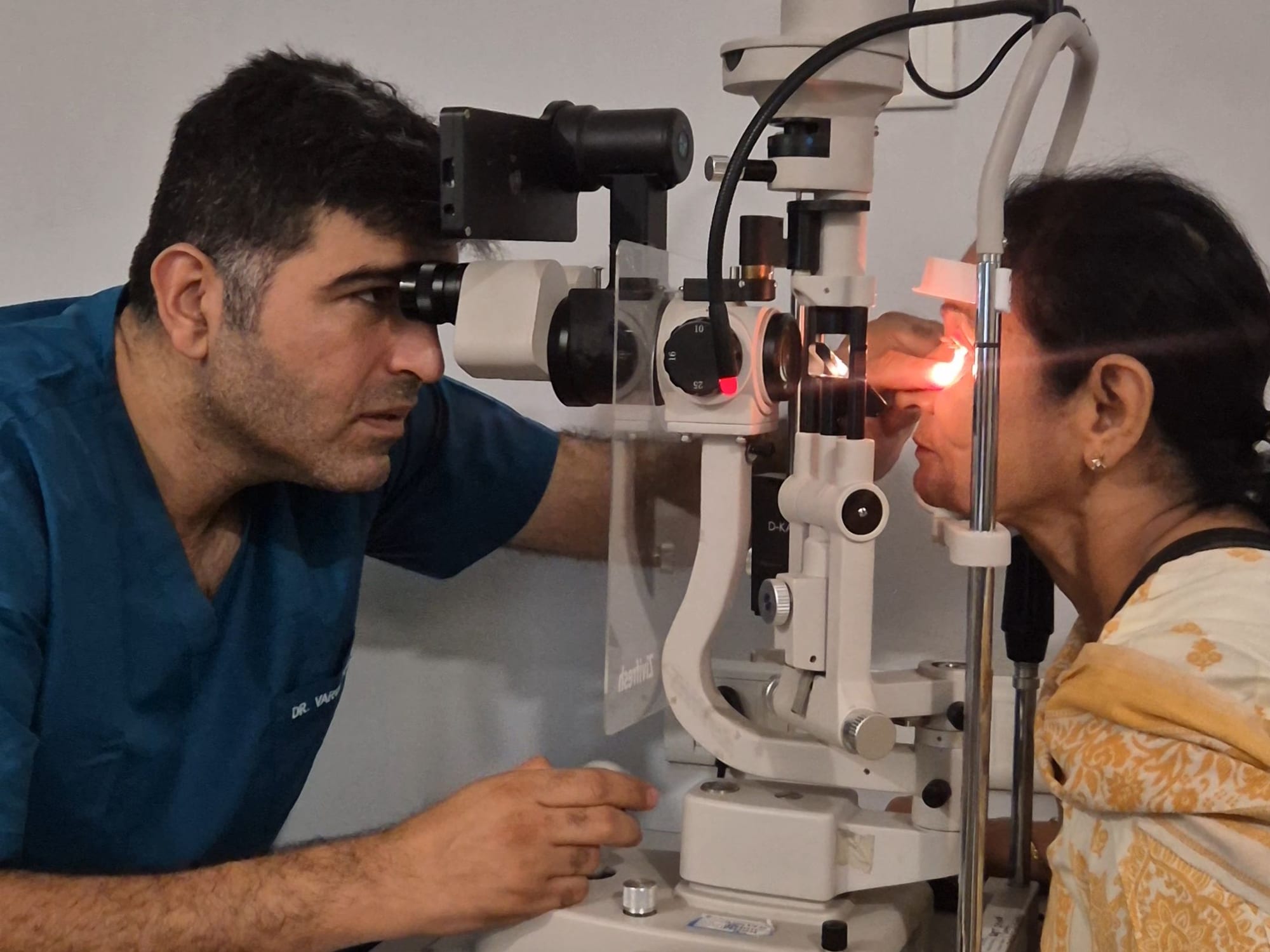
Uveitis is inflammation inside the eye. It can cause redness, pain, blurred vision or floaters, and it can come from an infection, an autoimmune condition, an injury, or — often — no identifiable cause at all. Left untreated, it can threaten sight, so the priority is always to control the inflammation quickly and then find out why it happened.
Steroid & steroid-sparingDrops to systemic therapy
InsuranceCashless guidance available
COMPARE YOUR OPTIONS
Uveitis — types & approaches
Uveitis is classified by where inside the eye the inflammation sits. That location shapes both the symptoms and the treatment.
01
Anterior uveitis
Inflammation at the front of the eye (iris and nearby tissue).
The most common type; causes redness, pain and light sensitivity.
02
Intermediate uveitis
Inflammation in the vitreous gel, mid-eye.
Often presents with floaters and blurred vision, less pain.
03
Posterior uveitis
Inflammation at the retina or choroid, the back of the eye.
Can affect vision significantly; needs prompt retina-level assessment.
04
Pan-uveitis
Inflammation affecting the whole eye, front to back.
Usually needs the most intensive treatment and closest monitoring.
FINDING THE CAUSE
Why we look beyond the eye
In many patients, no cause is ever found, and that's still manageable. But because uveitis can be the eye's way of signalling a body-wide condition, we screen for common triggers before settling on long-term treatment.
Infections — tuberculosis, herpes viruses, toxoplasmosis, and others
Final cost depends on the type of uveitis, whether investigations or systemic therapy are needed, and whether surgery becomes necessary. Our care team explains each factor before you decide.
Transparent estimates after assessment
Cashless support across major TPAs
Coordinated referral for systemic work-up where needed
4 years of trust — a cataract surgery patient's experience
From glasses to clear vision
Real patients, real reviews
Real patients, real reviews
Real patients, real reviews
Smiles like these make our work worth it
Patient trust is at the heart of everything we do
A happy patient shares their eye treatment experience
PATIENT QUESTIONS
Uveitis — patient questions
Is uveitis the same as conjunctivitis (pink eye)?
No. Conjunctivitis affects the surface of the eye and is usually mild; uveitis is inflammation inside the eye and can threaten vision if untreated. A red, painful eye should always be checked rather than self-treated.
Will I need lifelong treatment?
Not always. Many people have a single episode that resolves fully. Others, especially with an underlying autoimmune condition, need longer-term or recurring treatment.
Can uveitis cause permanent vision loss?
If untreated or poorly controlled, yes — through complications like glaucoma, cataract or macular swelling. That's why prompt treatment and monitoring matter.
Do I need blood tests even if only one eye is affected?
Often yes. The pattern of your uveitis, not just which eye, guides which tests are useful.
Is uveitis contagious?
No, uveitis itself is not contagious, even though a small number of cases start from an infection.